

About the practice
I'm Ela Korjenic.
I grew up in Bosnia during the war, spent 20 years in HR, and now coach people through the part of rebuilding where you're no longer in crisis but don't yet know what comes next.
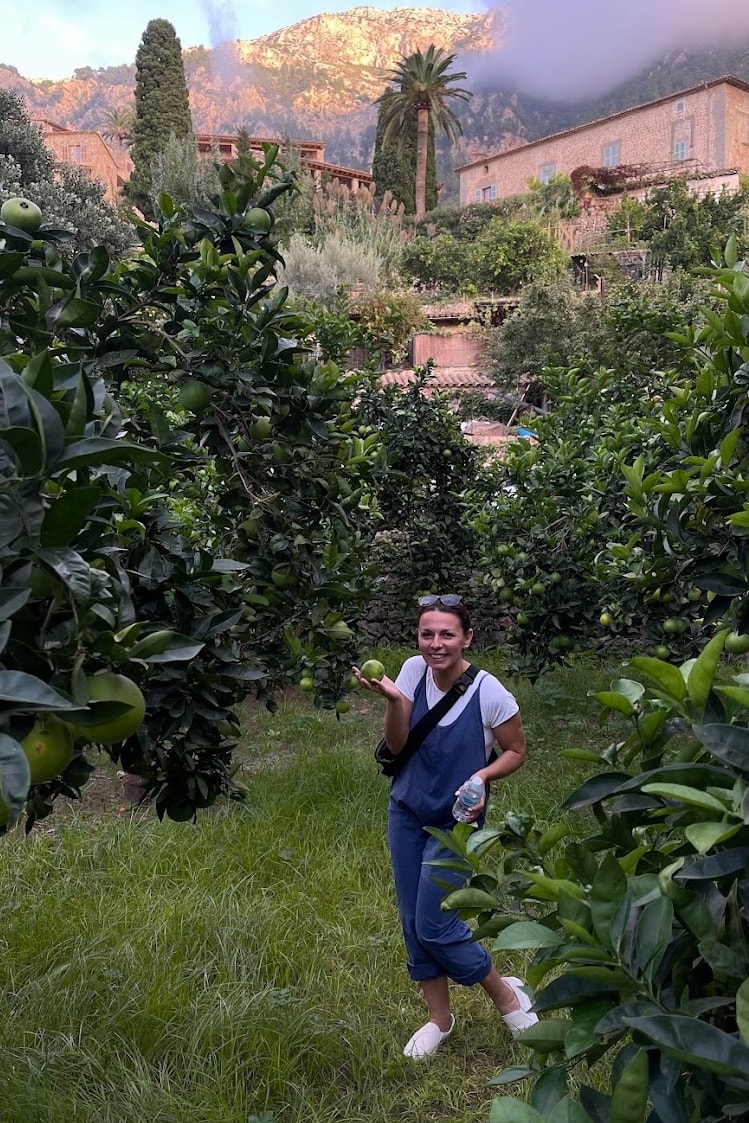
My story
When I was ten years old, a grenade explosion changed my life in a matter of seconds. I was injured. My sister was injured. My mother was killed. Some memories from that time have stayed remarkably clear. I remember the ordinary moments, what it felt like to be a child, and the way I understood the world before that day. Then there was everything that came after.
When you are a child, you don't have the language to make sense of something like that. You know that something terrible has happened, that someone you love is gone, that the adults around you are afraid and grieving, but you don't necessarily understand what any of it means for the rest of your life. You simply adapt to what is in front of you.
For me, that meant learning to keep going.
I learned early that life does not stop just because you are hurting. There were still things to do, places to go, people who needed you. So I became good at moving forward. I learned to be strong. I learned not to dwell too much on what couldn't be changed.
For a long time, I believed that was what resilience meant: you survive something difficult, you put it behind you, and you keep going.
And in many ways, that belief helped me. It gave me strength when I needed it. It helped me build a life far beyond the circumstances I was born into.
I eventually moved to the United States, where I spent the next 25 years building a life. I built a career, raised my family, created a home, and became someone other people could rely on. I was capable. I was independent. I worked hard. I handled things.
And I was proud of that.
Then, after the birth of my second child, something changed.
What had once felt manageable became much harder to carry. My mental health deteriorated significantly, and I found myself struggling in ways I hadn't expected. I was trying to care for my children and work a full time job while also trying to figure out what was happening inside me. There were years when simply getting through the day could feel like an enormous effort.
This was especially difficult for someone who had spent much of her life believing that being strong meant being able to handle things herself.
I remember wondering, How can I be struggling this much after everything I've already survived?
Part of me felt that I should know how to get through it. I had overcome so much. I had built a successful life. I was a mother and a wife, a professional, a person other people depended on. From the outside, there were plenty of reasons to believe I should be okay.
But being capable and being okay are not always the same thing.
For years, I searched for answers and tried different ways of getting better. I tried different forms of talk therapy as well as medication. I tried other approaches and strategies, sometimes feeling hopeful that I had finally found the thing that would make a difference, and sometimes feeling discouraged when it didn't.
There were periods when I wondered if I would ever feel like myself again.
That part of my life changed the way I think about resilience more than anything that happened when I was ten.
As a child, I had learned that resilience meant enduring.
As an adult, I began to understand that resilience can also mean admitting that something isn't working and being willing to try another way.
It can mean asking for help again when the first kind of help didn't work.
It can mean staying open when you're tired of trying.
And sometimes, it means accepting that rebuilding isn't a straight line.
Eventually, seeking professional support became an important part of my own rebuilding. It wasn't a dramatic transformation, and there wasn't one moment when everything suddenly became easy. It was gradual. There were setbacks, uncertainty and plenty of moments when I questioned whether I was actually making progress.
But slowly, I began to understand myself differently.
I started to see that strength wasn't about never struggling. It wasn't about pushing through every difficult feeling or proving that I could handle everything on my own.
Sometimes strength looked like slowing down.
Sometimes it looked like acknowledging that something hurt.
Sometimes it looked like asking for help.
And sometimes it meant letting go of the version of myself I had built around simply surviving.
That was a different kind of rebuilding.
It meant becoming more honest with myself about what I needed, what I believed, what I was carrying, and what I wanted my life to feel like.
The little girl who survived that grenade explosion is still part of me. I don't see her as someone I need to leave behind or overcome. I see her with a tenderness I didn't always have for myself when I was younger. She did what she needed to do to survive. She learned to be strong because she had to.
The woman I became owes that little girl a great deal.
But I also don't want her to have to spend the rest of her life surviving.
That realization has shaped so much of how I think about life now.
Years later, returning to Bosnia with my family brought another layer to that journey. Coming back to the place where so much of my story began brought up emotions I hadn't expected. There was grief, but also love. There was familiarity alongside a sense of being a stranger in a place that was once home. There were memories I had carried for decades suddenly feeling much closer.
It made me think about how much of our identity is shaped by the stories we tell ourselves about where we've been.
For years, my story had been largely about survival. Then it became about achievement, responsibility, family and building a good life.
Eventually, I began asking a different question:
What if my life doesn't have to be defined by what I survived? What if I get to decide what comes next?
I don't believe rebuilding is something we do only once.
Sometimes we rebuild after trauma or loss. Sometimes after burnout, a relationship ending, a career change, becoming a parent, moving somewhere new, or reaching a point where the life that once fit no longer does.
And sometimes nothing looks obviously wrong from the outside. You may have a career, a family, a home, and a life that appears perfectly fine, and still feel that something inside you has shifted.
I've learned that you don't have to wait until everything falls apart before you allow yourself to make a change.
You also don't have to become a different person to move forward.
Sometimes rebuilding is less about starting over and more about coming back to yourself, perhaps for the first time, or perhaps in a way you weren't able to before. What this means for my work with you I don't work from the belief that people need to become tougher to move forward. I believe we sometimes need space to understand what has shaped us, listen honestly to what we need now, and figure out what comes next. That's the kind of space I want to create for my clients.
What trail running taught me
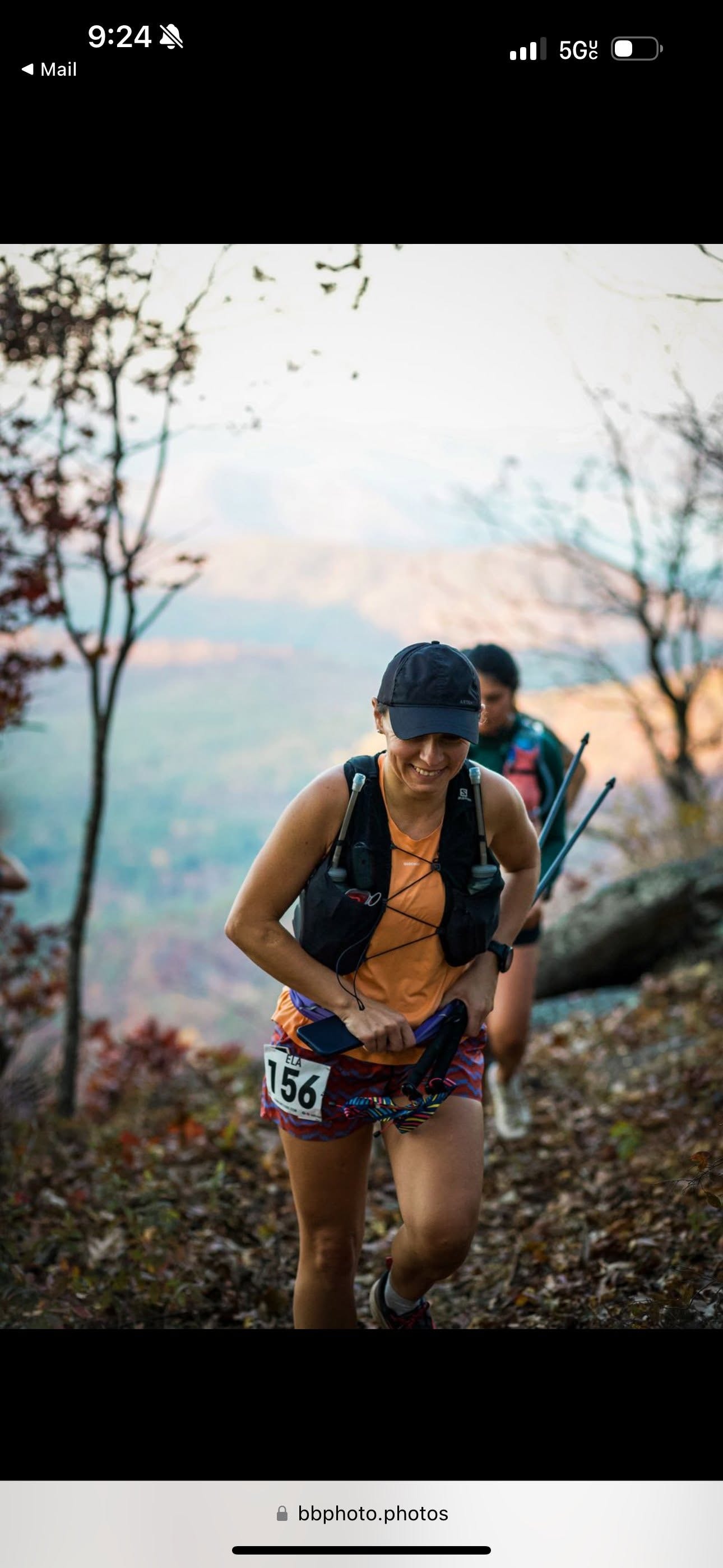
I started running after the war, and in many ways, I think I started because of my uncle.
Before the war, he was a physical education professor and a runner. Running was a part of who he was. Then he stepped on a land mine and lost his leg above the knee.
I was young, and I watched someone who had once been so physically capable have to learn how to live in a completely different body. I saw the loss and the enormous adjustment that followed. But what stayed with me most was something I still find difficult to put into words: somehow, he remained positive.
He is still the most positive person I know.
He didn't pretend that what happened wasn't devastating. He simply refused to let it be the only thing that defined his life. Eventually, he started exercising again. He lifted weights every day. He walked on his crutches twice a day. He built a new routine around a body and a life that had changed completely.
As a child, I didn't have the words to understand what I was witnessing. I just watched him.
Looking back now, I realize that I was learning something about resilience long before I ever thought about resilience as a concept. I was learning that you can lose something fundamental and still find a way to keep moving. That your circumstances can change without taking away your ability to choose how you meet them. And that strength doesn't always look dramatic. Sometimes it looks like getting up, doing the work, and taking another walk.
Years later, when I started running myself, I think some part of me was carrying that memory with me.
Running became a way of moving forward, but it also became a connection to something I had seen in my uncle: the belief that there is always something you can do with where you are, even when where you are isn't what you would have chosen.
Over time, the trails became much more than a place to exercise. They became a place where I could think, breathe, struggle, and sometimes simply be quiet.
There is something different about being on a trail for hours at a time. There is nowhere to hide from yourself. The noise of everyday life fades away, and you are left with your thoughts, your body, the terrain in front of you, and whatever emotions you brought with you.
Sometimes that feels peaceful. Sometimes it doesn't.
I eventually found my way to longer distances and ultra-running. I was drawn to the challenge, but I was also drawn to what happens when the easy answers disappear. On a long climb, when you're tired and still have miles to go, you can't make the mountain smaller. You can't negotiate with the distance. You can only decide what to do with the next few minutes, the next section of trail, the next step.
I've had races where I felt strong and confident and everything came together. I've also had races where things went very differently from what I planned. I've experienced disappointment, frustration, exhaustion, and the difficult realization that sometimes wanting something badly isn't enough.
Those experiences changed the way I think about grit.
For a long time, I believed that being tough meant pushing through. If something was difficult, you kept going. If you were tired, you pushed harder. If you wanted something badly enough, you found a way.
There is truth in that. Sometimes we really are capable of much more than we think.
But I've learned that pushing through isn't always strength.
Sometimes your body is telling you to slow down. Sometimes the conditions have changed. Sometimes the goal you started with no longer makes sense. And sometimes the bravest thing you can do is stop, reassess, and choose a different path.
Learning that distinction has been one of the most important lessons running has given me.
I've also learned that progress rarely looks the way we imagine it will. There are steep climbs, wrong turns, stretches that feel endless, and moments when you wonder why you ever thought this was a good idea. Then, almost without noticing, the terrain changes. You find your rhythm again. You reach the top of a climb. You see something beautiful that you would never have seen from the road.
Life can be like that too.
I eventually found my way to longer distances and ultra-running. I was drawn to the challenge, but also to what happens when the easy answers disappear.
And sometimes, it means accepting that rebuilding isn't a straight line.
What 20 years in HR taught me
For twenty years I worked in HR, most recently at Smurfit Westrock and before that at Accenture. I supported people through mergers, reorganizations, and life on teams spread across Europe, Asia, and the Americas. Much of the work happened in one-to-one conversations, with managers trying to lead through change and with people whose roles, or their sense of where they fit, had shifted under them.
One thing I learned is that the people struggling most were rarely the ones who looked like it. They were the reliable ones, the people everyone went to. They kept delivering until something gave, and by then they had stopped asking what they actually wanted.
I also learned that hard situations at work are almost never only about work. A difficult manager, a role that no longer fits, or a decision about whether to stay or leave usually touches something bigger: confidence, identity, family, and the story you've been telling yourself about who you are.
That's a large part of what I bring to coaching. I understand how organizations work and how decisions get made inside them, so you won't have to explain the politics of your workplace to me. We can start with what's really going on.
Why I do this work
I believe that most people already have more insight, strength, and wisdom than they give themselves credit for. What is often missing isn't another person telling them what to do. It's the space to hear their own thoughts clearly. That's what I want to offer through Grit Beyond Limits. A place where you can be honest without having to perform, explore difficult questions without needing immediate answers, and look at your life with curiosity rather than judgment. Our work is practical as well as reflective. We might explore a decision you're struggling with, a pattern you keep repeating, a boundary you need to set, or a change you've been thinking about but haven't known how to begin. I won't have the answers for you, and I don't believe I should. Instead, I'll ask thoughtful questions, challenge assumptions when it is helpful, and help you turn insight into choices and actions that make sense for your life. Because meaningful change doesn't come from someone else giving you the perfect answer. It comes from understanding yourself well enough to make your own.
How I work
Compassionate. Practical. Honest.
My approach is trauma-informed: your experiences matter, and they do not have to determine the rest of your life. We make room to understand the past when it is useful, while staying focused on the choices and support you need now.
Coaching, not therapy
Trauma-informed coaching is not therapy, trauma treatment, or crisis care. I do not diagnose or provide clinical mental-health support. If therapy or urgent care is the better fit, I will say so clearly.
Professional depth
I bring 20 years of HR experience, coaching training, and trauma-informed training to conversations about work, identity, change, and resilience.
Honesty with care
I offer direct observations with respect. The goal is not to push you, but to help you see your options more clearly.
Your pace, your path
We work at a pace that feels right for you, with online coaching available wherever you are in the world.
Training & background
- 20 years of HR experience working with people, organizations, and complex workplace challenges
- Coaching and trauma-informed training
- Ongoing education in resilience, attachment, adult development, and coaching
- Lived experience of adversity, loss, recovery, and rebuilding